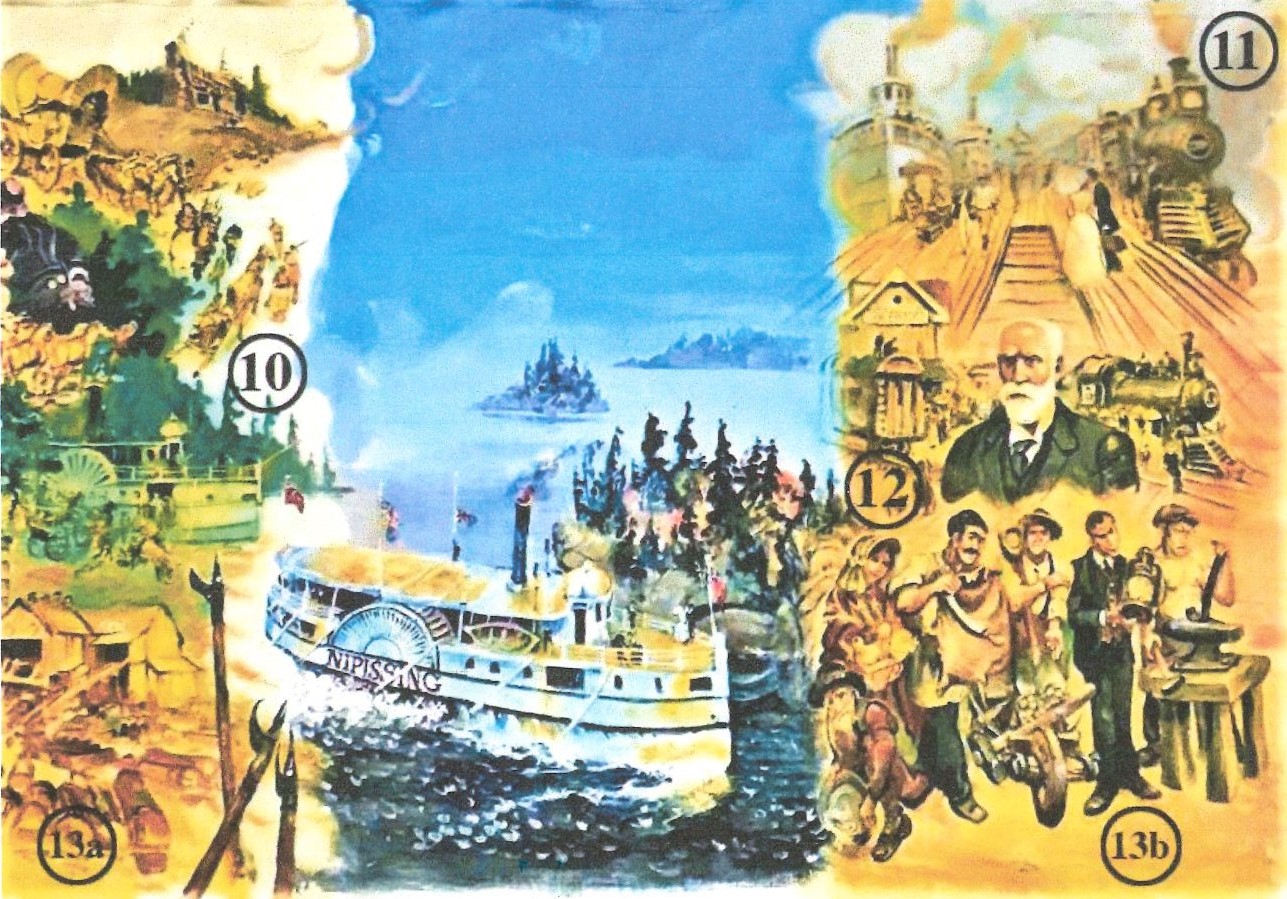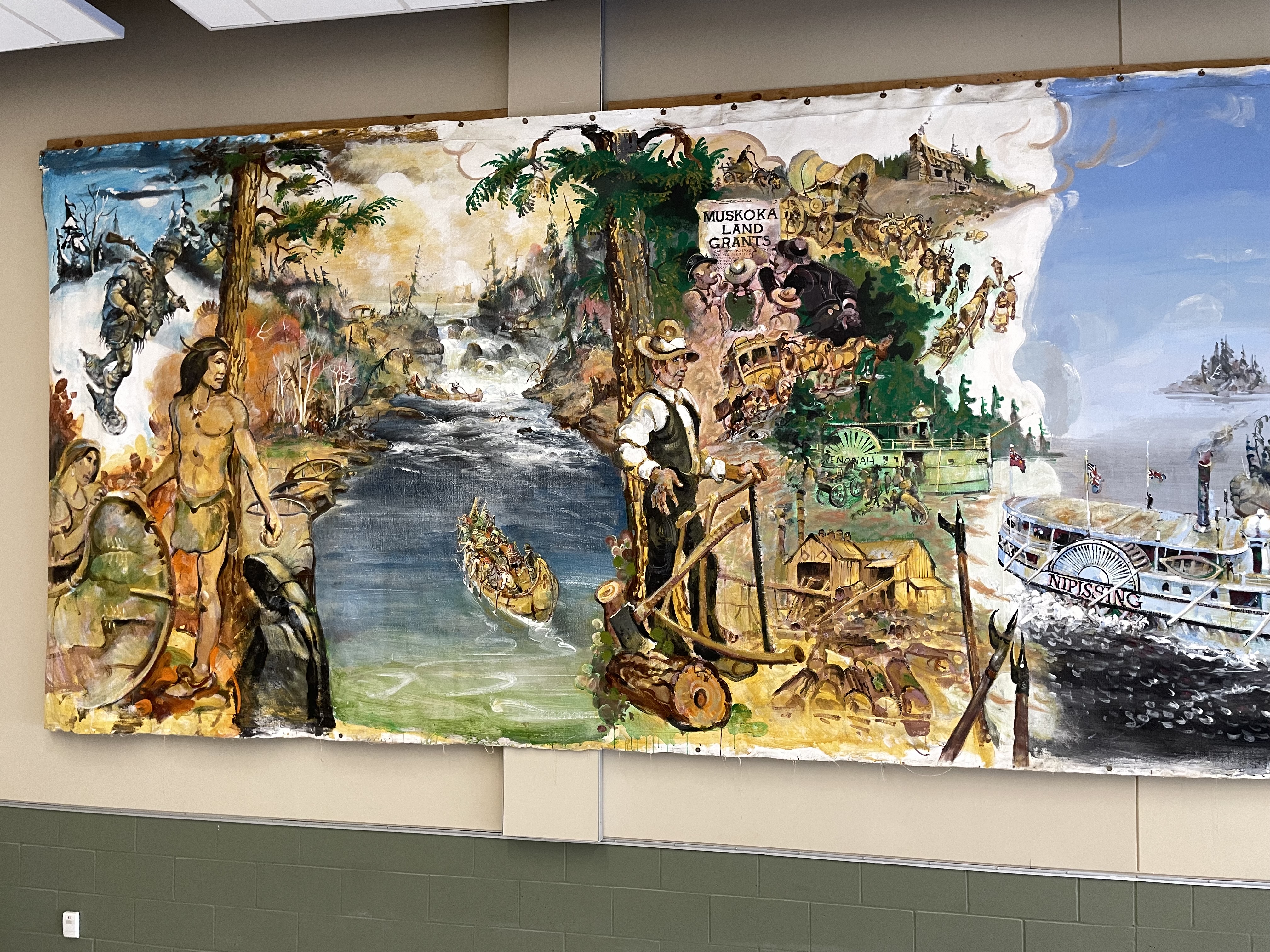
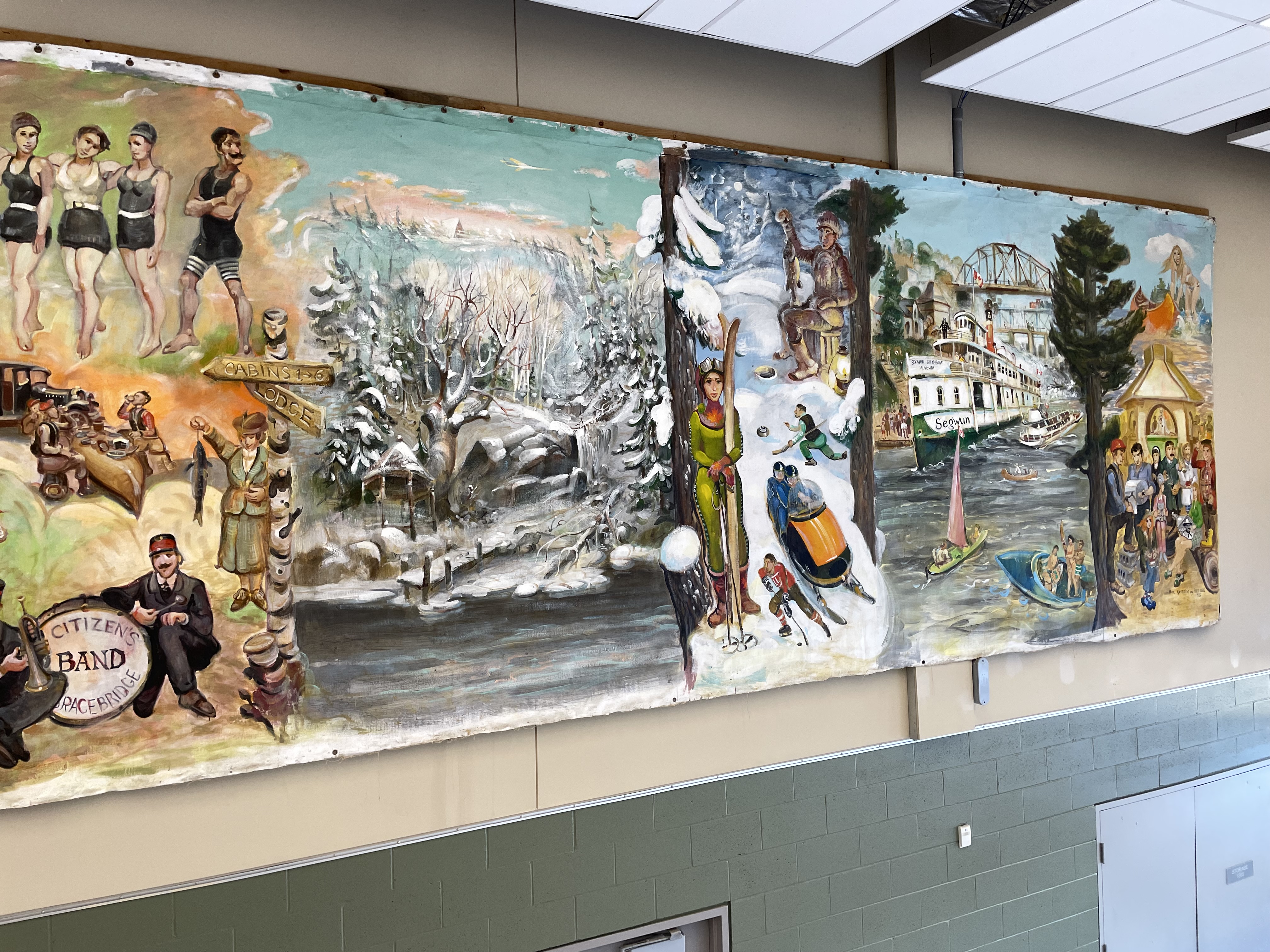
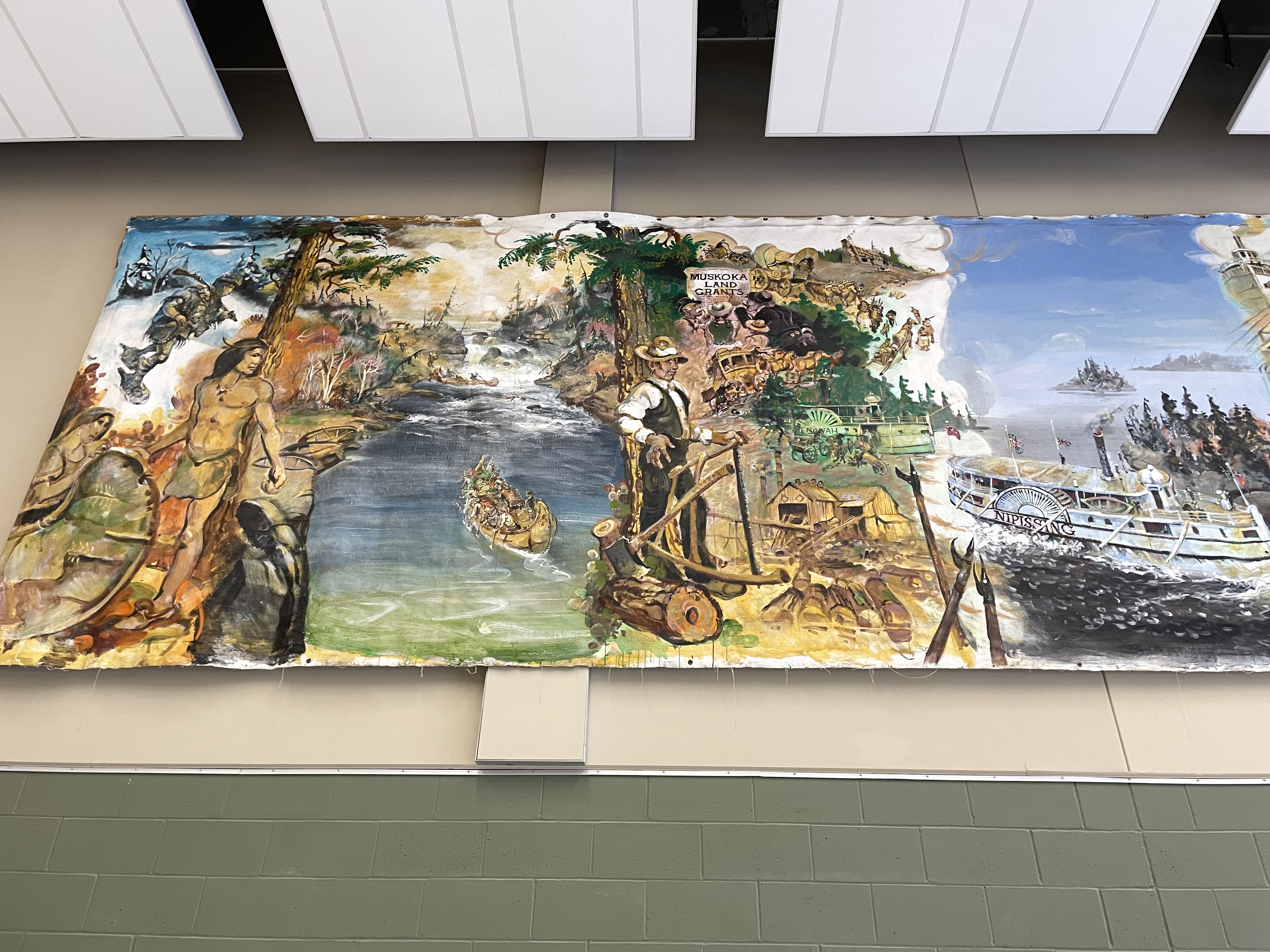
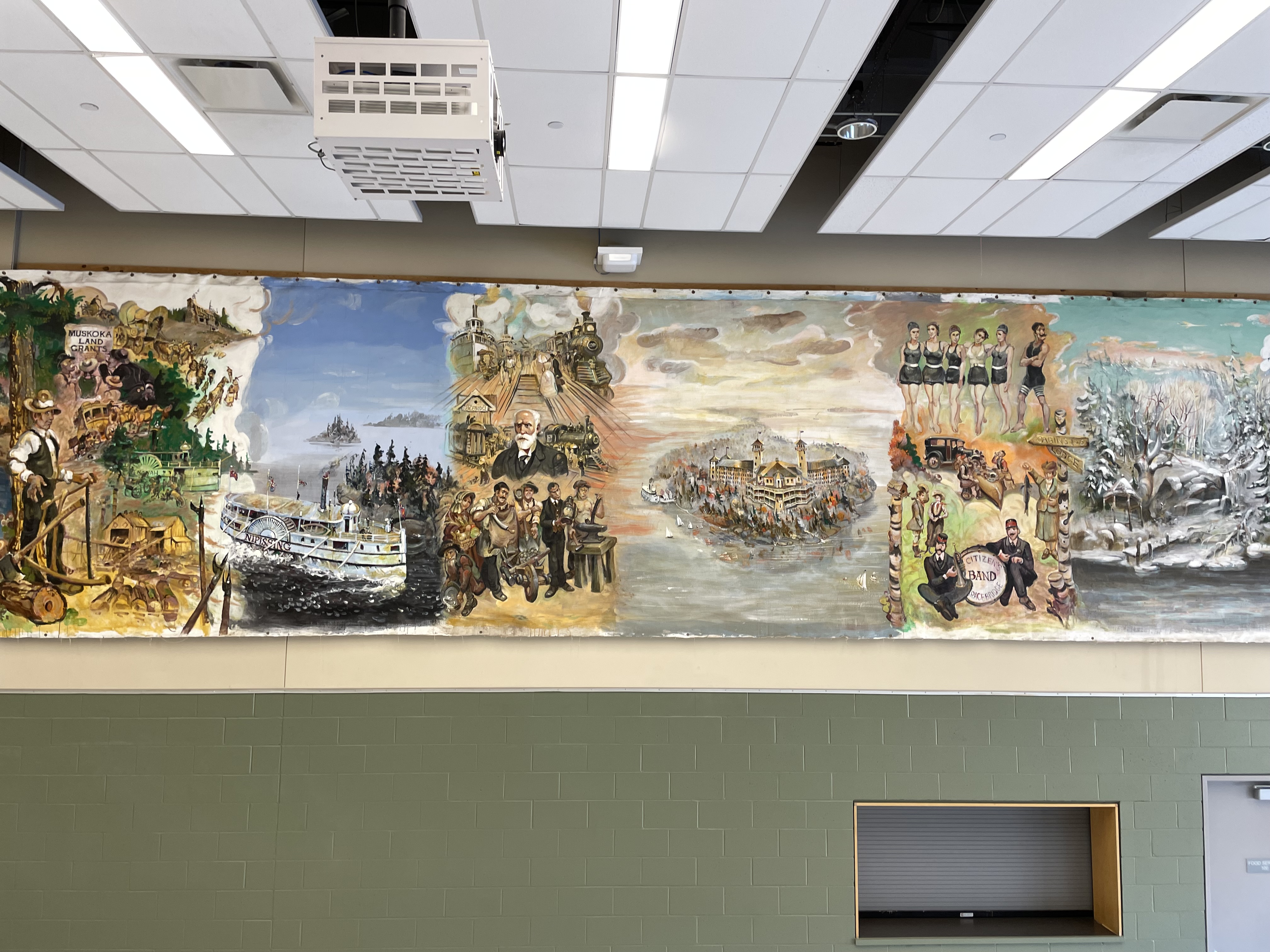
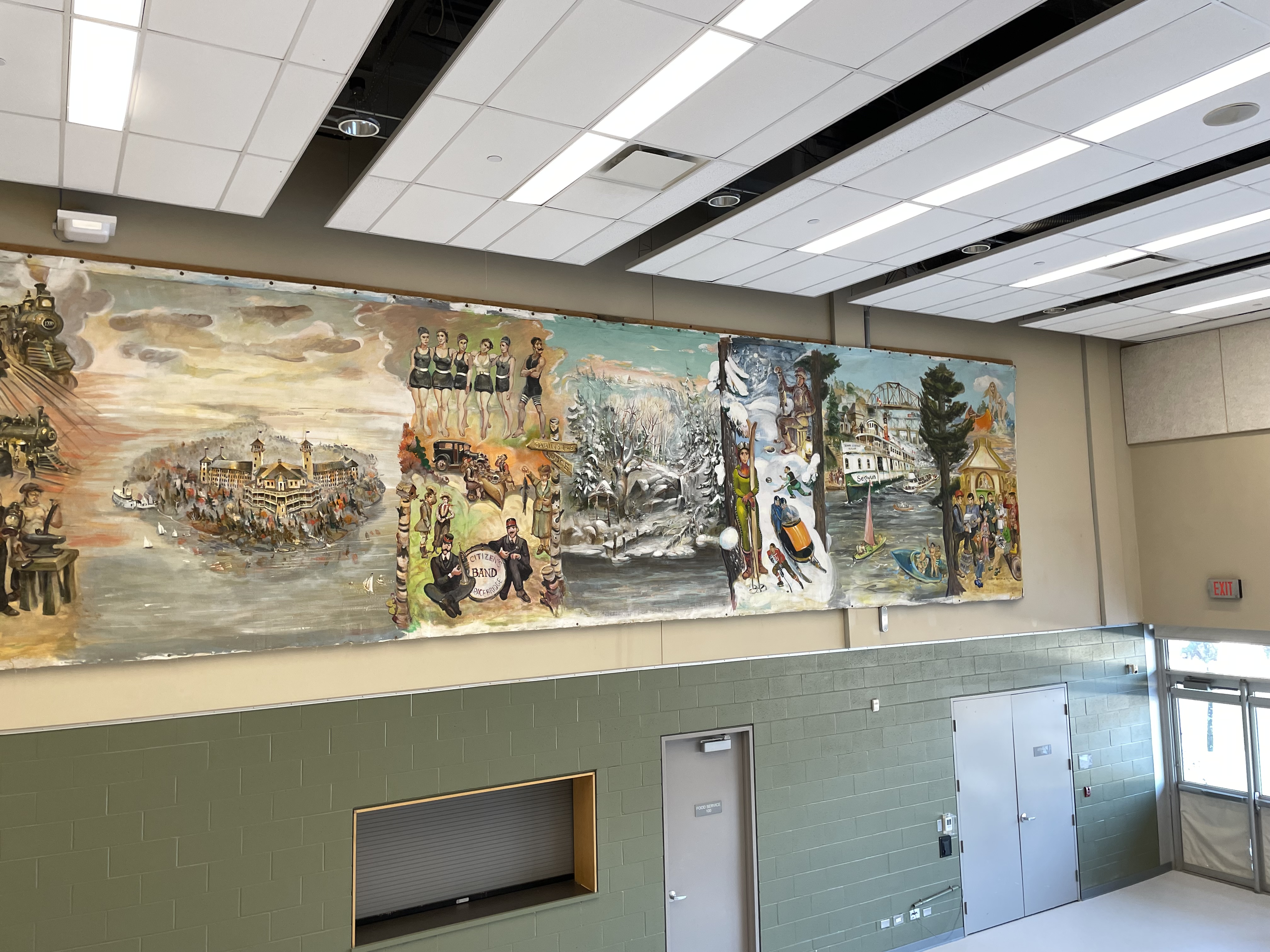
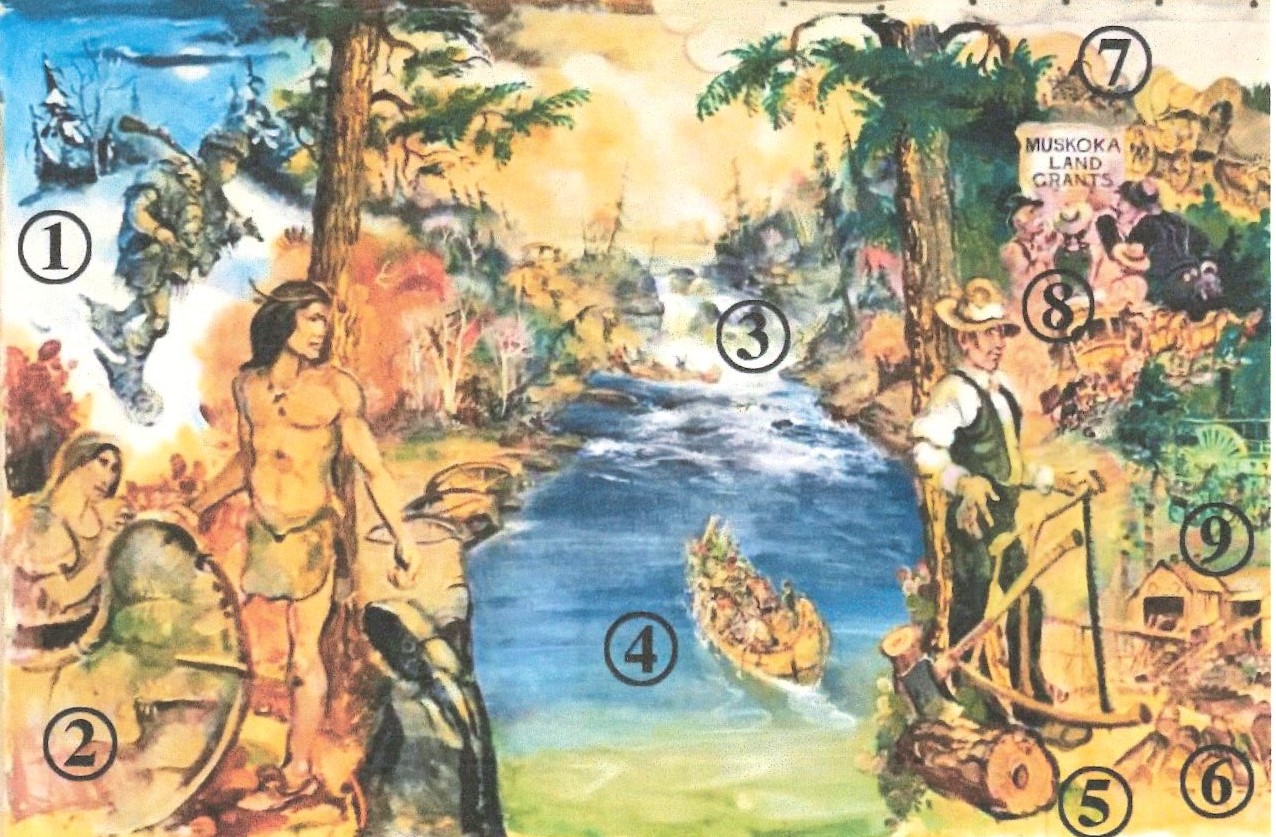
1. Before European settlement, trade among Indigenous peoples was commonplace. The first significant interest non-Indigenous settlers had in Muskoka came through the fur trade. This scene depicts a trapper on snowshoes, armed with a flintlock rifle, returning from his trapline with a collection of pelts.
2. Prior to European settlement, Muskoka was home to a number of Indigenous tribes at different times, including the Iroquois, Ojibwa, Algonquin, Chippewa, Huron, and Mississauga. One popular camping location during their travels was the flatland at the base of the North Branch of the Muskoka River, near what is now Bracebridge Bay Park. This depiction shows a young Indigenous couple disembarking from their birchbark canoe at this historic site.
3. Explorers such as Étienne Brûlé, Samuel de Champlain, F.J. Bressani, and possibly even Norse adventurers were among the earliest to navigate Muskoka’s rivers and lakes. This scene illustrates them portaging over Bracebridge Falls as they charted the region.
4. To improve the defense of Upper Canada, the British Royal Engineers sought a water route between Georgian Bay and the Ottawa River. Several surveyors and explorers, including J.P. Catty, W.B. Marlow, and W.M. Smith, traveled through Muskoka. Henry Briscoe is recorded as the first white man to journey up the Muskoka River, passing through what would become downtown Bracebridge. This scene depicts a typical exploration group at Bracebridge Bay.
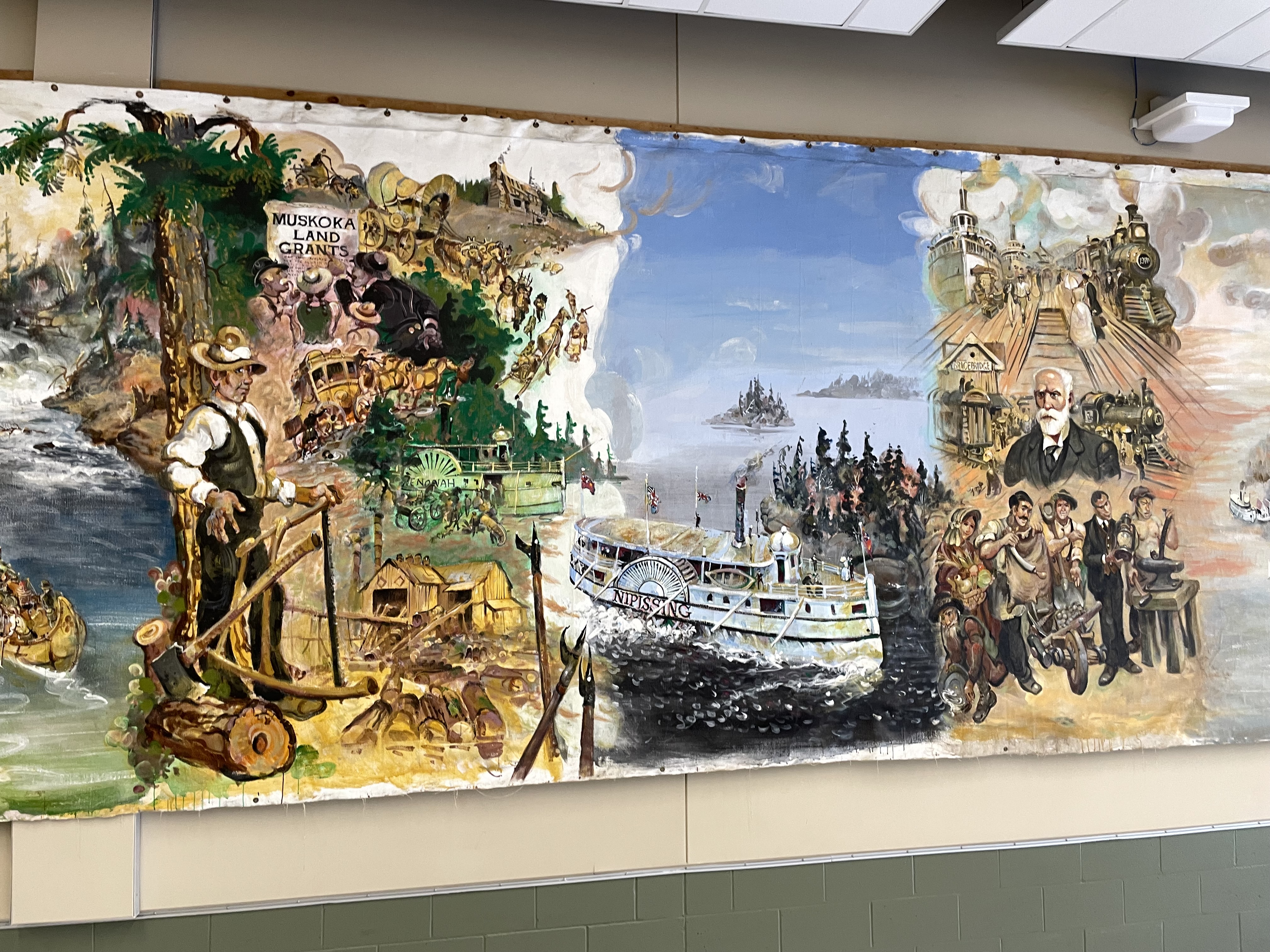
5. Early surveyors and settlers debated the quality of Muskoka’s forests, but the lumber barons saw vast opportunity. Logging companies rapidly harvested the huge stands of pine and hardwood, transforming what seemed an endless forest into a landscape greatly altered within 50 years.
6. The thousands of sawlogs produced by intensive logging operations—some from as far upstream as Algonquin Park—were skidded and floated down the Muskoka River. This activity led to the establishment of numerous sawmills along the river and surrounding lakes, fueling the local economy.
7. Encouraged by promotional materials advertising Muskoka’s fertile farmland, European settlers traveled the Muskoka Colonization Road to meet the Crown Land Agent in Bracebridge. There, they were guided to their “Free Grant Lands,” beginning a new chapter of settlement and agriculture in the region.
8. Recognizing the rapid growth of Muskoka, the Harvie Stage Company established scheduled passenger and freight routes to serve remote communities. Their central office was located at the site now occupied by Memorial Park in downtown Bracebridge.
9. In 1866, the Wenonah, the first steamboat of A.P. Cockburn’s Muskoka Navigation Company, landed at Bracebridge Bay, marking a new era of water-based transportation for passengers and goods throughout the Muskoka region.